
Termite Control
Termites—commonly known as white ants—are highly destructive pests that damage wood and other cellulose-based materials without showing early warning signs. Their activity often goes unnoticed until serious harm has already been done to furniture, documents, and structural elements of your property.
These pests usually build their colonies beneath the ground, preferring damp and hidden environments to thrive. From there, they infiltrate buildings by traveling through narrow cracks in walls, floors, and foundations, silently expanding their reach within your premises.
Different Types of Termites
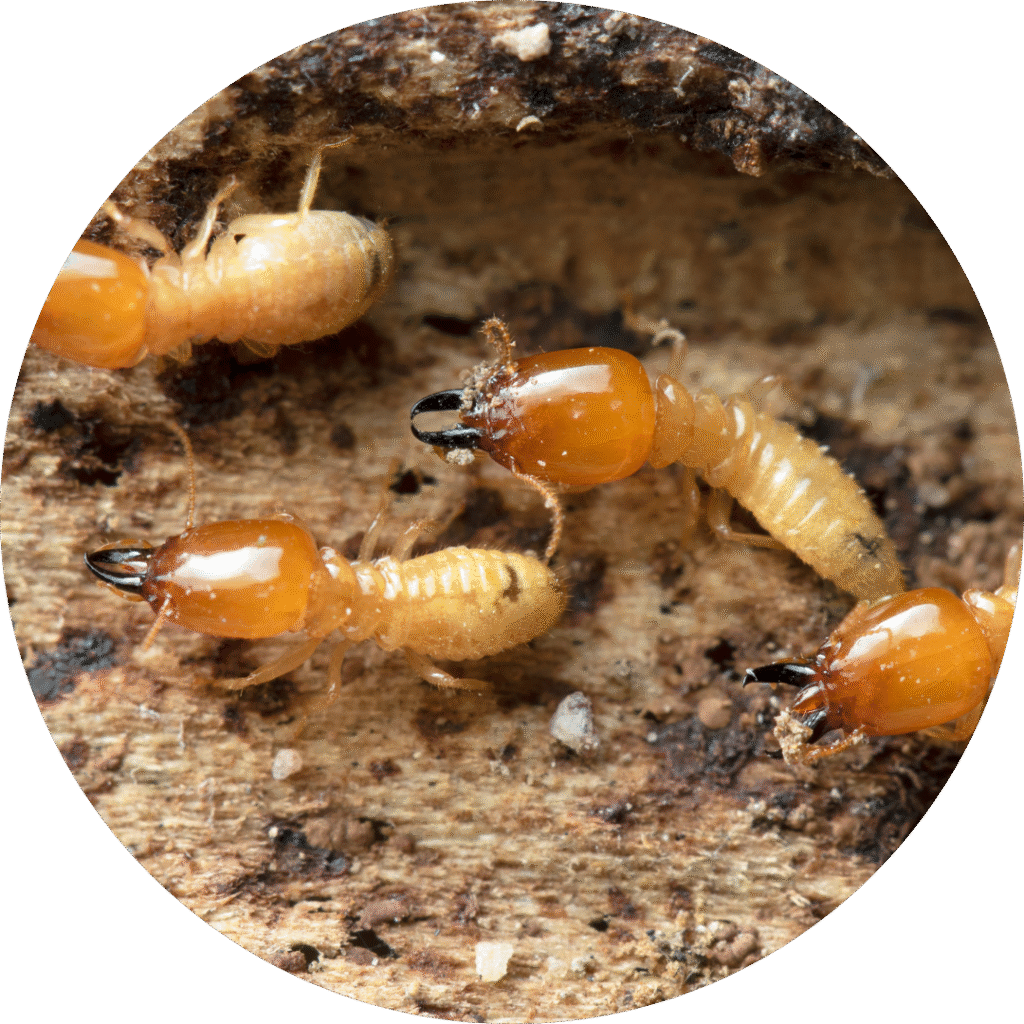
DAMPWOOD TERMITES
Dampwood termites prefer to live and feed in wood with high moisture. Due to their need for wet conditions, they are usually found in decaying wood or areas where plumbing leaks keep the wood constantly damp. These termites don’t typically infest buildings, as construction wood often lacks the moisture they require.
Dampwood termites don’t carry diseases and are less common in dry environments. To keep them away, ensure proper drainage around your home and fix any leaks. Also, avoid storing moist or rotting wood near your house to reduce the risk of infestation.
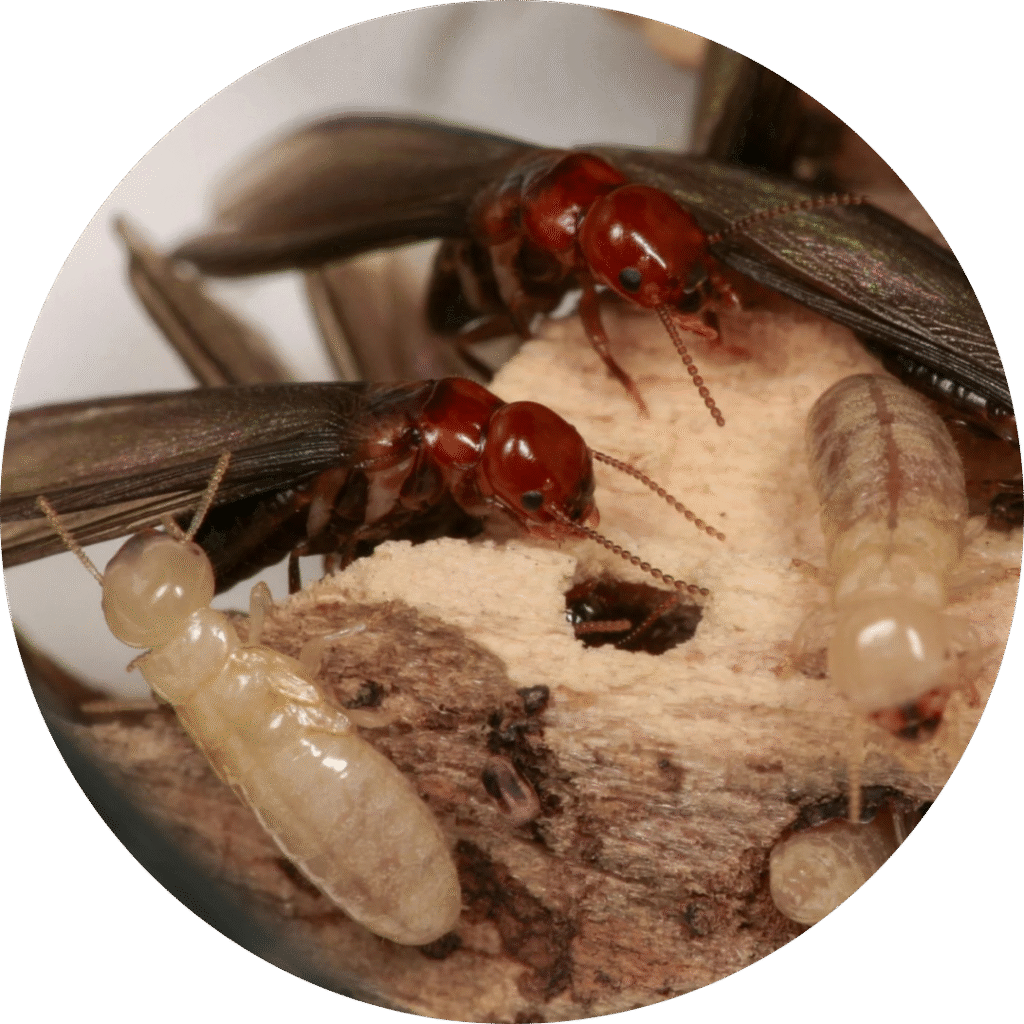
DRY WOOD TERMITES
Drywood termites may establish colonies containing as many as 2,500 individuals. These colonies operate without true workers—young termites, known as “false workers,” are responsible for carrying out all essential duties.
They consume wood, wallpaper, plant-based fabrics, and even plastic materials. Drywood termites reside in dry wooden areas and don’t need soil or moisture contact to survive. Inside structures, they create internal nests and carve pathways through timber, causing internal damage that can weaken structural supports and compromise safety.
To keep these pests away, ensure scrap lumber and firewood are not stored near your house. Additionally, seal exterior gaps, crevices, and joints to reduce the chances of an infestation.
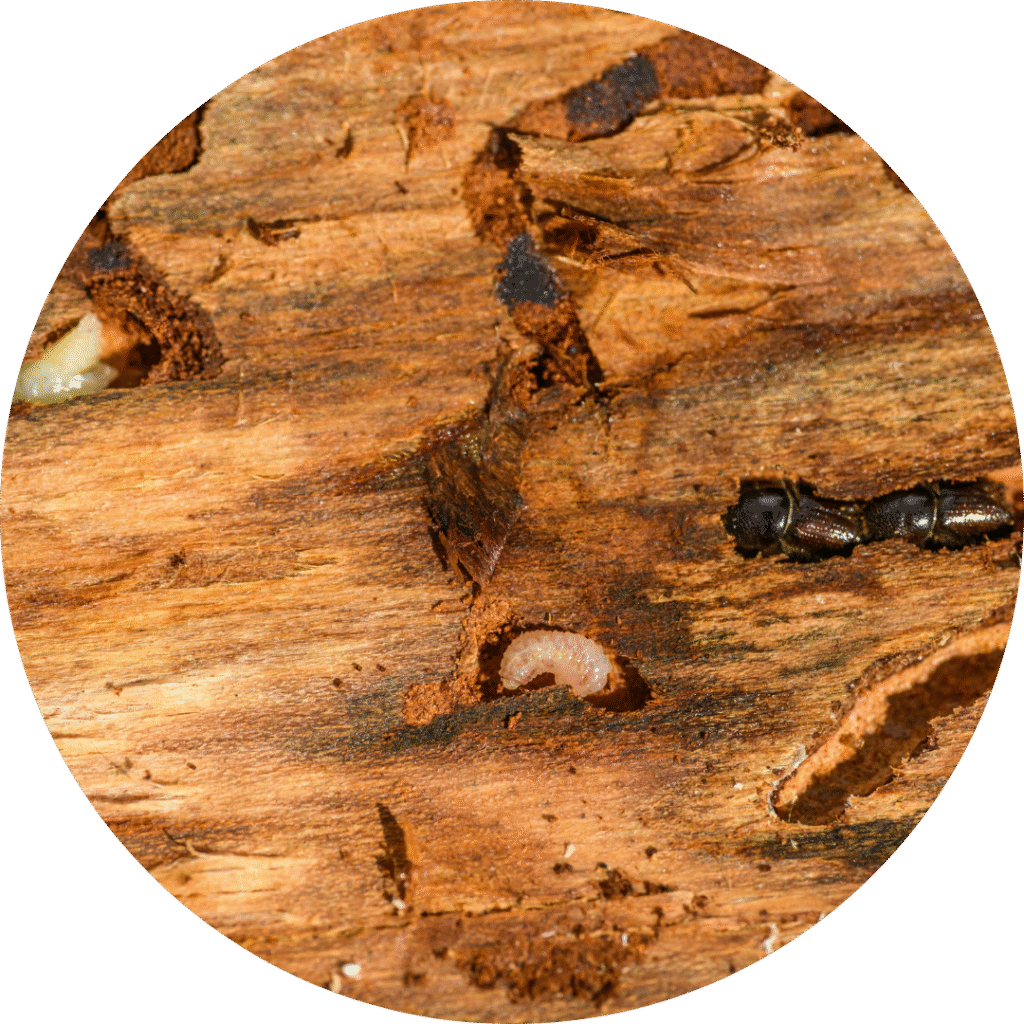
SUBTERRANEAN TERMITES
Subterranean termites can form extremely large colonies, sometimes reaching populations in the millions. These colonies are divided into three main castes: workers, soldiers, and reproductives. They feed on wood, wallpaper, plant-based fabrics, and even plastic materials.
They depend on constant contact with moist soil and usually nest underground or in damp spots above ground. To reach food sources, they create protective mud tubes, allowing them to travel safely between the soil and structures. During spring, winged termites (called swarmers) emerge in search of new places to build fresh colonies.
Among all termite species, subterranean termites are the most destructive. They can damage wooden structures, subfloors, insulation, plumbing lines, and even pool systems.
To avoid such infestations, prevent water from collecting near your home’s foundation, and remove any wooden debris from your yard.

Treatment for Termites problem
Pest India Solution provides comprehensive anti‑termite protection for both Pre‑Construction and Post‑Construction projects in residential and commercial settings. Our specialists use advanced termiticides formulated to eliminate every stage of the termite life cycle.
To block subterranean termites from migrating upward, we drill 45‑degree holes where the floor meets the wall (or just above the skirting, depending on the flooring). These holes, spaced roughly 30 cm / 12 in apart, run along the entire exterior perimeter. We then saturate the masonry with termiticide, creating an impenetrable chemical barrier.
On ground‑floor premises, internal partition walls receive the same treatment; upper floors generally do not require drilling because RCC slabs serve as effective mechanical barriers that termites cannot breach.
Whether you’re building anew or safeguarding an existing structure, we deliver both pre‑construction soil treatments and post‑construction corrective services against subterranean termites.
For reliable, professional results, choose Pest India Solution—the leading termite control service for homes and businesses across Mumbai, Navi Mumbai, and Thane.
Get A Free Quote / Need a Help ?

